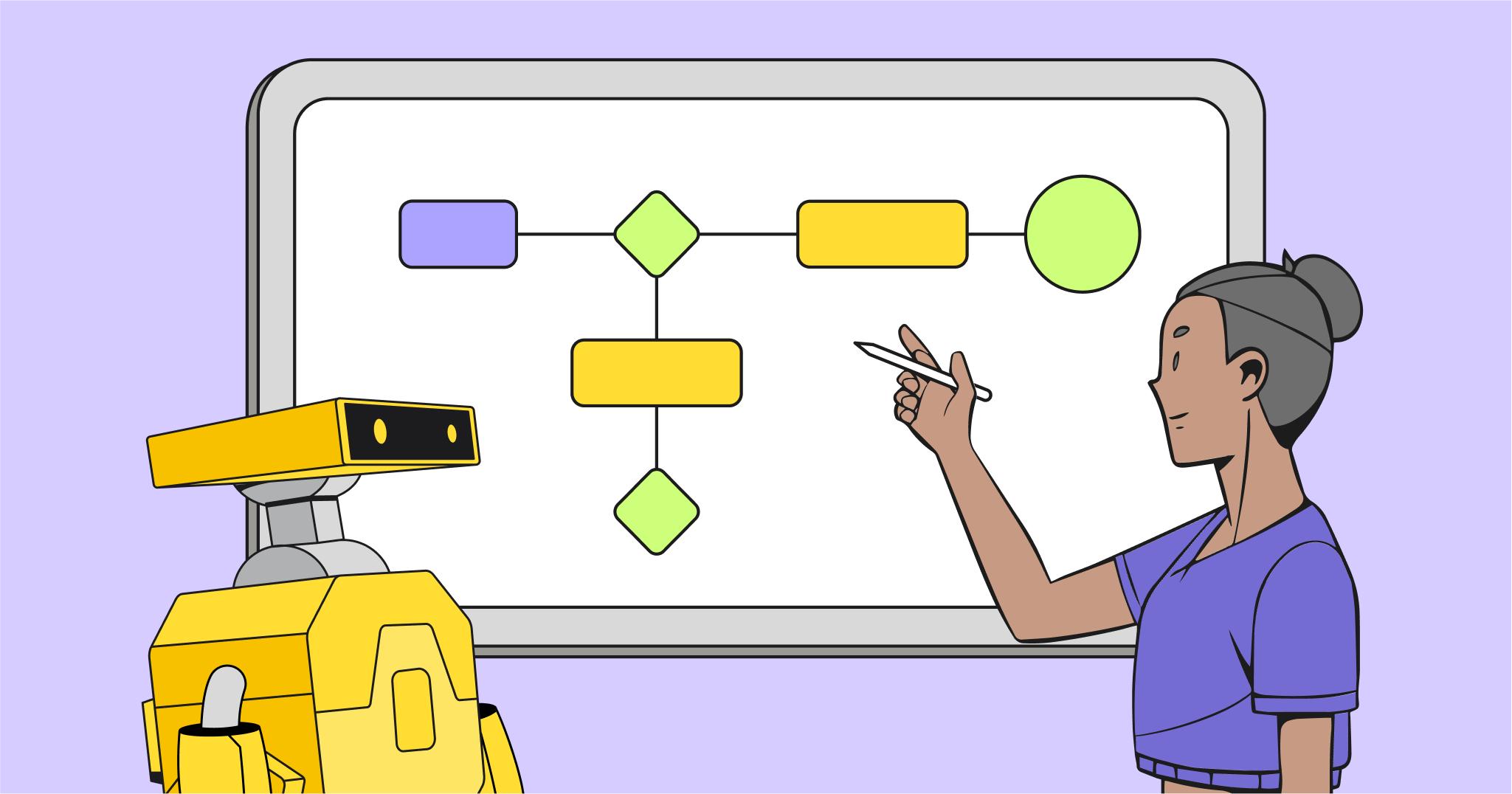
How powerful an AI agent is depends on how you work with it.
Why is it that two people can use AI, yet one gets far better results than the other? We all have the same kind of brain, but who we become depends on how we think. AI is no different: the difference does not only come from the power of the model, but from how we organize our thinking, package workflows, and build a system good enough for the AI to work inside.
1. Same AI, different thinking, different results
When two people use the same AI agent, one may get excellent results after just a few interactions, while the other spends hours revising the output. The difference does not always come from the AI’s capability; more often, it comes from whether the user knows how to set clear goals, break problems down, and guide the AI in the right direction.
Effective users rarely give one command and then wait for the answer. They keep adjusting the process: providing better context, setting clearer standards, and checking the output more carefully. In other words, they do not just use AI to get answers; they treat AI as an extension of their own thinking and working style.
2. Skill-creator: packaging good flows into something reusable
When working with AI agents, there will be sessions that feel smooth and productive, but there will also be times when the output gets stuck. If you notice that a good workflow repeats two or three times, that is usually a sign that you should package it into a skill.
A skill-creator mindset is the habit of turning an effective way of working into a reusable asset. For example:
- A question structure that helps the AI consistently understand the core problem.
- An output evaluation process that reliably produces stable results.
- A multi-step task flow that you have to use again and again.
Once packaged as a skill, what used to live only in your personal experience becomes something reusable, shareable with teammates, and scalable to more people. That is the shift from getting lucky once to owning a repeatable system.
3. Harness engineering: turning good flows into a stable environment
If skill-creator is how you package a thinking flow, then harness engineering is how you build the environment that makes that flow run reliably.
Harness engineering is the discipline of building the entire environment around an AI model, including tools, permissions, memory, feedback loops, guardrails, context management, session handoffs, and everything else except the model itself.
The term was coined by Mitchell Hashimoto, the HashiCorp founder and creator of Terraform, in early February 2026. He defined it very simply:
“Anytime you find an agent makes a mistake, you take the time to engineer a solution such that the agent never makes that mistake again.”
The SWE-agent paper from the Princeton NLP team, published at NeurIPS 2024, showed that with the same model, same task, and same compute budget, changing only the environment design improved performance by 64%.
The key point is this: instead of asking only, “Is this model smart?”, we should also ask, “Is the environment around this model good enough for it to work well?” If an agent keeps making the same mistake, the right move is not to hope it behaves better next time; the right move is to engineer the system so the mistake is harder to repeat.
Harness engineering is built around three important ideas:
- Guardrails: constraints that keep the agent from going off track and wasting tokens.
- Documentation: a record of how the work was done and what mistakes happened, so neither humans nor agents repeat them.
- Auto-eval: an automatic, continuous mechanism for checking output quality instead of relying on manual judgment at the end.
Simply put, the model is the brain, while the harness is the scaffolding and operating system that helps that brain work the right way. If the AI does well once but cannot repeat that success the second time, the problem may not be the model. The workflow may not be clear enough, the context may not be good enough, the checks may not be strict enough, or the environment may not be stable enough.
4. Balancing light and heavy armor
CThe practical question is: if harnesses are like armor, how much armor is enough?
You do not always need a full harness. If the task is small, repetitive only a few times, and low-risk, a lightweight workflow may be enough. But if the task is production-grade, involves many steps and states, or could trigger cascading failures, then a heavier harness becomes worthwhile.
The right mindset is not “more armor is always better,” but rather:
- simpler tasks -> lighter harness.
- more repetitive tasks -> more reason to package them as skills.
- more important tasks → stronger guardrails, documentation, and auto-eval.
In other words, you do not wear armor because you like weight; you wear armor because the cost of failure is higher than the cost of complexity.
5. Conclusion
When two people use the same AI tool, the one who creates more value is often the one who thinks more clearly, packages good flows into skills, and places those skills inside a solid harness so they run reliably. That is the art of turning scattered personal experience into a smooth operating system.
If you want to get the most out of AI, the question is not just: “Is this AI model powerful?” It should also be: “Have I designed the environment and the way I work with it well enough?”
References
- SWE-agent paper by Princeton NLP- https://arxiv.org/abs/2405.15793
- Harness engineering by Mitchell Hashimoto - https://mitchellh.com/writing/my-ai-adoption-journey